Style vs. Voice
A thought on approach

It’s the right question, the wrong way.
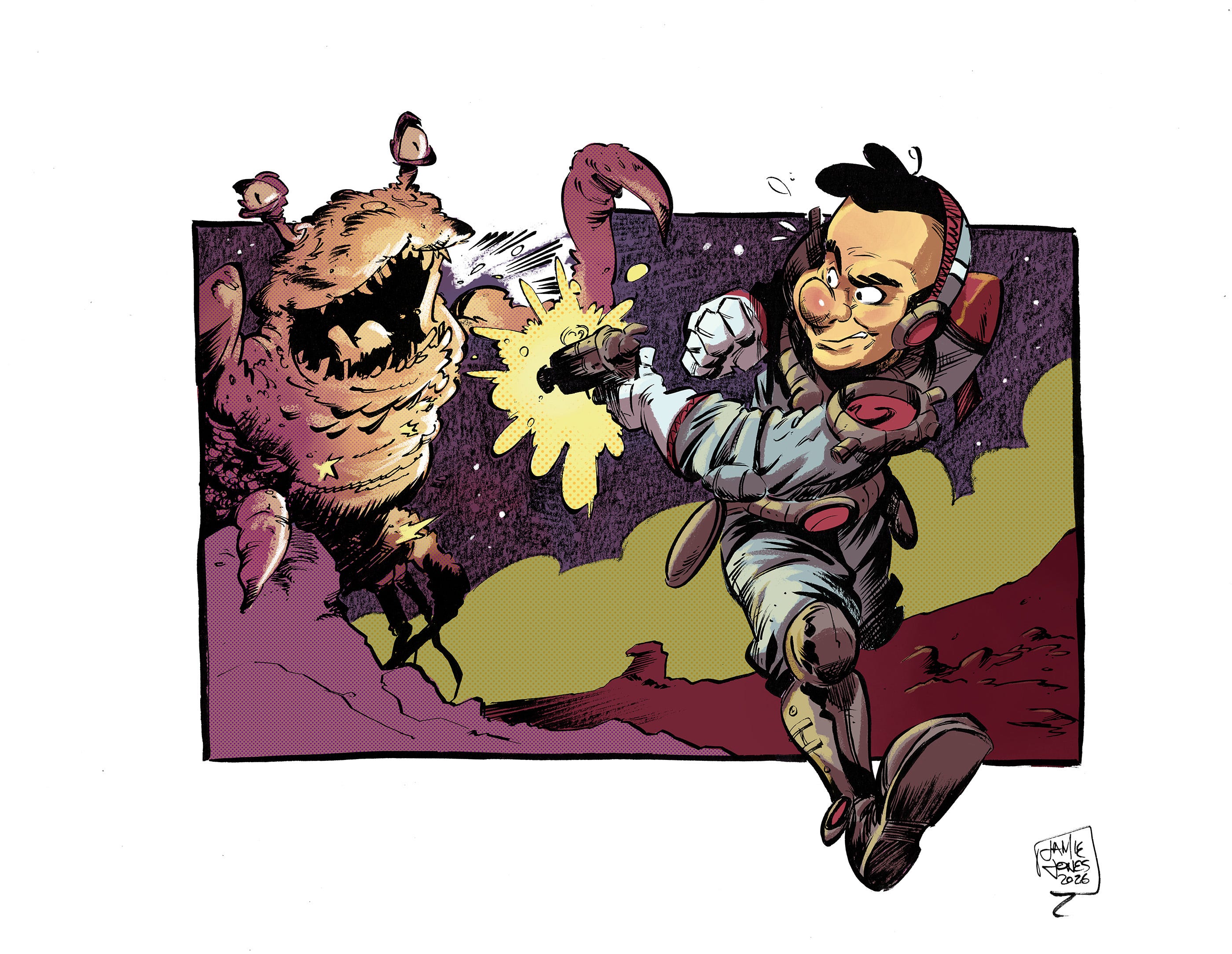
How do I find my style? A question that plagues the minds of young artists. (young in the newness of creating, not in the age sense). I’ve been teaching younger students for the past six months, ages 10-13 (so, actual young artists, although age seems to be irrelevant), and have been asked, “how do I find my style?” more times than I can count. And I’ve come to the conclusion that we are asking the right question the wrong way and with a simple change of wording, the mindset changes and we will find our answer to “style” a whole lot quicker.
Indulge me a little.
What if we rephrase to: What is my voice? Or, what am I trying to say? Or better, what am I trying to achieve with this story? By using actionable pieces of story telling rather than the nebulous factor that is Style you gain control of the momentum and feel of story that will allow Style to follow. Voice is easier to control, especially when starting out. That is not to say that your voice will be any good, rather it is easier to wrangle.
Your artistic style comes late.
Later than you want and often without warning. In my experience you wake up one morning, after decades of dedicated work, and find your style defined. You don’t know better. You don’t get to choose your style. You study, you put in the work and it just happens. There is an ideology that says, “style is everything you do wrong.” it’s an ideology I tend to ascribe to. You need to know what is right for you to make the distinction as to what is wrong and therefore your style.
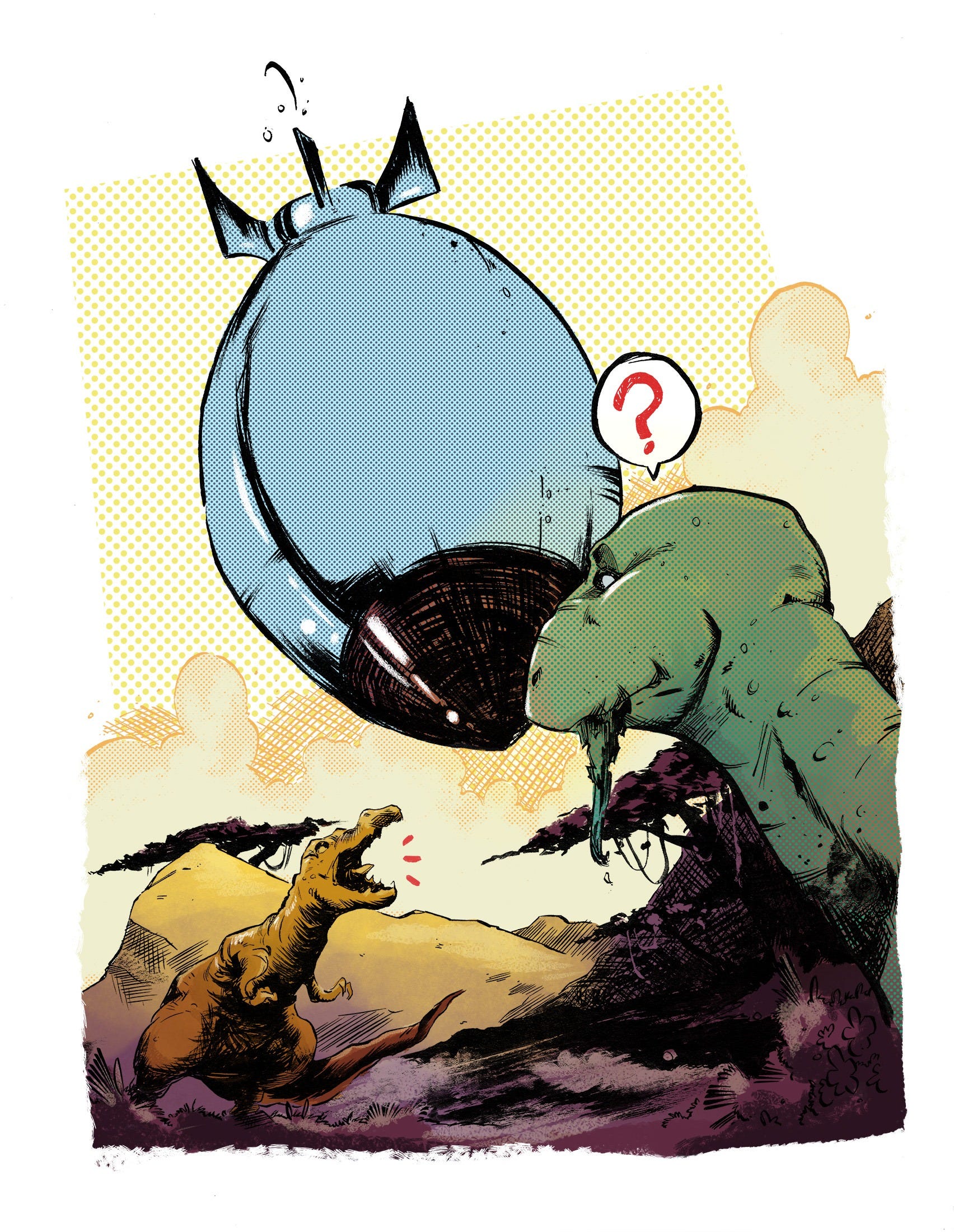
Whether you realize it or not, you have a voice. You’ve been communicating with some flair since you were able to let your parents know you were hungry. If you are struggling with finding something you’ve had since you were a baby, perhaps you just need to hone in on who you are talking to. Kurt Vonnegut said he wrote every story to his dead sister. He had been talking to her the longest. He knew what made her laugh and what information she needed to make the story work. Cutting out everything else that would make it have a “wider audience” It is in the precision and personal details that makes a story relateable, not the wide brush of emotion encompassing the entirety of human exsitance. Too big of ideas are too abstract. Where a small melodrama unfolding over doing the dishes between two loved ones becomes relatable in its exactness. Tighten up. Hone in. Tell a story to your mother, your brother, your best friend. Craft the details to their interests not what you think “your audience” needs. That’s your voice. That’s your style. I can draw a pretty crappy picture and send it to my brother and the joke can still land. And if it lands for him I’m sure it would land for someone else. And that’s my voice. I can go in and tighten up the drawing to make it look better, but the communication is still the same.
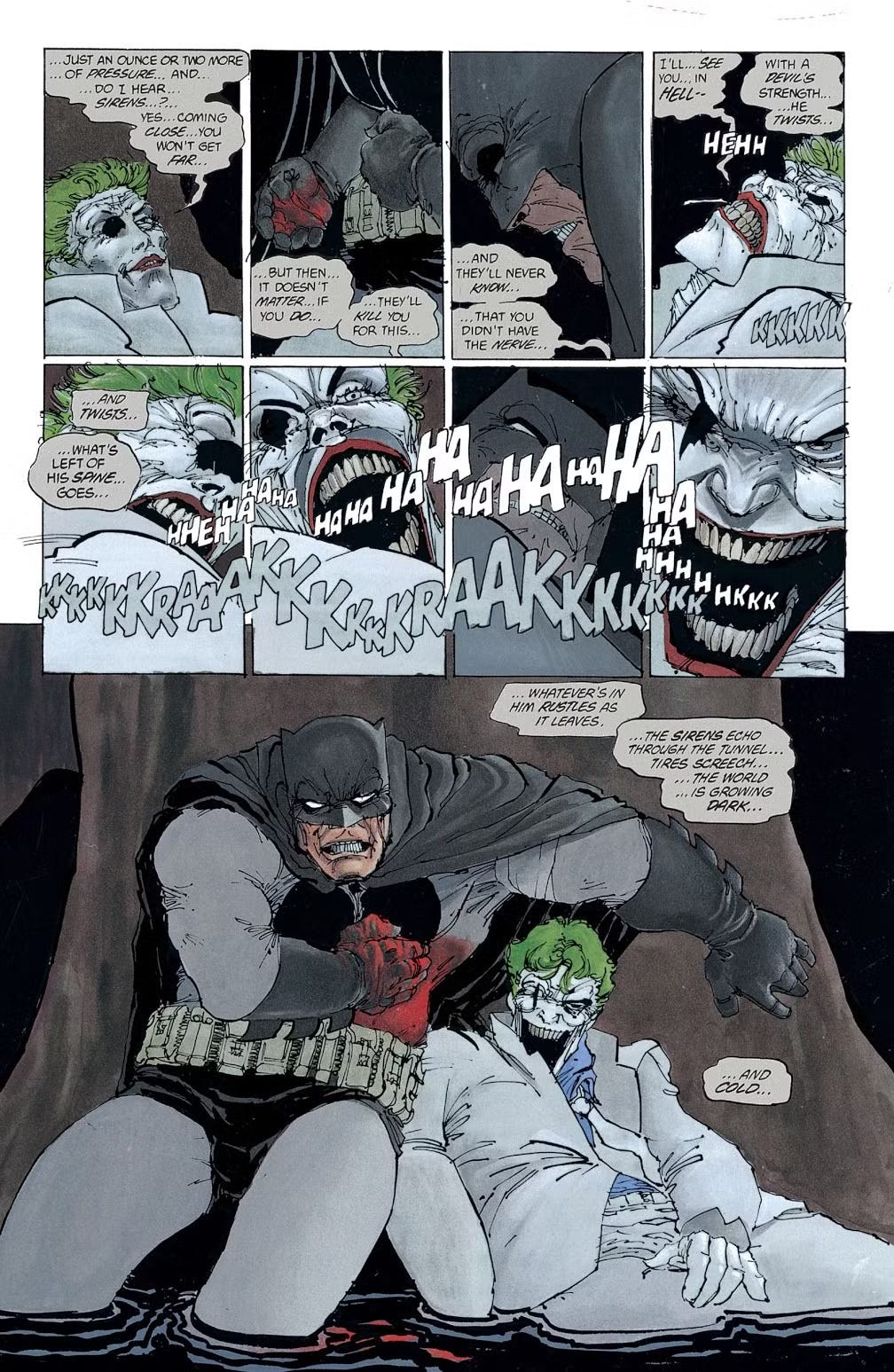
I am at the end of this thought, but as I close I am reminded of a page in the Dark Knight Returns. Batman is holding the Joker’s dead body in a pool of blood and water. The whole book was penciled by Frank Miller and inked by Klaus Janson. Except that panel. Batman is inked by Miller. It was actually inked over the Janson inks. Janson is a beautiful inker with a very exact line. Miller wanted the image to be ugly, Batman not as a hero, but a force. This decision was not one of style, Batman doesn’t look like this in any other part of the book this is a choice of tone and voice. By making the figure look “uglyier”, rougher Miller was able to convey his story better. Art as story telling. Art as communication. Art as Voice not style.
SPAKOW MERCH!
I have some new shirts and hats up for sale over at artofjamiejones.bigcartel.com and I think they look just dandy! Get you some!